
— E S S A Y · JUNE 2026 —
One Grilled Sausage,
Or Two
On gym buddies, a helper’s quiet wisdom,
and the small reasons that keep us going.
Nicky, it’s so good to see you!” my husband exclaimed, walking quickly toward a short-haired woman with bright red highlights who had just sat down on one of the machines at the gym. Nicky’s right hand was reaching up, trying to grab the handle. Hearing my husband’s greeting, Micky stopped what she was doing, slowly climbed down from the machine, and paused the timer on her phone.
“Oh oh, I’m sorry Nicky, I didn’t mean to disturb your exercise!” my husband said, startled.
“Yeah, obviously,” I grumbled internally, rolling my eyes.
But Nicky, always a very very lovely lady, smiled at my silly husband and said, “Don’t be ridiculous! You never disturb me!”
Nicky is one of my husband’s gym buddies. While I move quickly between the gym equipment like a ninja, sneaking around and praying that not a single trainer will greet me, my husband’s laughter can be heard from the other side of the room. Walking with him feels like walking with a dog who keeps stopping to sniff another dog’s bottom. Or, in my husband’s case, to gossip with other gym members.
We hadn’t seen Nicky for weeks. Usually, every Thursday night, my husband would be in the same cardio class as Nicky. Together, they could turn the cardio room into a stand-up comedy show, laughing loudly between weightlifting and skipping rope. From one of the trainers, we heard that Nicky had to have surgery on her leg.
“It’s not too bad. Bit by bit, I’ve started using some of the gym equipment again. But when I tried the cardio class, it still hurt.” Nicky said it in a casual tone, but it was laced with frustration. Her jaw tightened, and her red-painted fingers clenched her phone. Nicky has a goal: to hike Machu Picchu and fill her retirement with adventures and good health.
The gym I go to is not exactly aimed at young people. The average age of its members is around sixty. While Nicky has Machu Picchu as her goal, Ivon, a seventy-year-old woman, came to the gym three years ago because of a doctor’s diagnosis: severe osteoporosis. Ivon had only two choices: injection therapy, or six months from her doctor to try weight training and increase her bone density.
Six months passed, and Ivon reached the required bone density target. Days turned into weeks, weeks into months, and months into years. Now, at seventy, Ivon walks into the gym with quick, light steps. Every two days, Ivon’s slim body and short black hair can be seen skipping rope with impressive agility.
It amazes me how differently humans find reasons to keep going.
I once heard a story from a colleague. She came to lunch with a tale of a patient with a terminal, incurable illness. My friend told me that this patient said he was tired. Tired of feeling exhausted every day. Tired of feeling that his life no longer had meaning because he was always in and out of hospital. Tired of the dozens of tablets and capsules he had to take. Then he muttered, “I just want to die.”
January came. The TV screen in his hospital room was showing the Australian Open. He followed every match diligently, then talked about it with the nurses or anyone willing to listen. January moved on, and the patient’s resolution shifted.
“I don’t want to die. I want to live till next January so I can watch the Australian Open again.”
“That’s it? Tennis is the reason to live?” asked another colleague of mine, a girl in her twenties who had not yet needed to understand the exhaustion of life.
I, on the other hand, quietly understood.
Like millions of other millennials, I already want to retire. Day in, day out, it’s just same shit, different day. Every morning at eight, I drive to the office accompanied by uplifting songs, while lamenting the fact that my husband is not a CEO in disguise.
There exists a WhatsApp group filled with my old high school classmates. Sharing is caring is the group’s main motto, demonstrated through a downpour of selfies from its members. Followed by the second motto: we listen without giving solution. Being useful is not the purpose of this WhatsApp group.
But sometimes, very rarely, the chat is filled with a discussion that is slightly more substantial. This time, we were discussing buying a car. There were two camps: one that believed you should save first and buy it in cash, and the other that believed you might as well buy it on instalments. Everyone had their own reasons. Both were valid. Until one friend, Mr. Rooster; because his build resembles a free-range chicken, gave his verdict on why instalments were his ninja way.
“The thing is, I’m more motivated to work to pay bank instalments than to save money. If I save first, there will always be something that comes up. I’m not afraid of taking money out of my savings, but I am afraid of missing an instalment payment.”
And that is the reason why Mr Rooster and I remain loyal to going to work every morning. Not because we are terribly afraid of debt collectors, but because the instalment exists. It has a due date. It has an amount. It has consequences if ignored. Saving for something abstract is easy to postpone. But an instalment waits on the twenty-fifth, regardless of whether you are sad, lazy, or feeling that your life has no meaning.
There is something strangely comforting about a deadline that cannot be negotiated.
Many years ago in Jakarta, I had a domestic helper. She was a part-time helper who came to my house for only three hours each day before going on to another house. One day, I heard from the security guard in our housing complex that she had just lost her eldest child in a motorbike accident a few days earlier. Hearing this, even though I had never met her child, I suddenly went speechless. Losing a child. Is there anything worse than that?
I offered my condolences, and then my tongue moved faster than my brain. “Mbak, can you work now? Don’t you need some time off first?” In my mind, if I had experienced that tragedy, I would have locked myself in my room, cried endlessly, and possibly ended up in a psychiatric ward.
Without losing a beat, my helper replied, “Hard to be sad for too long, Mbak, when you’re hungry.”
She was not trying to be philosophical. Life had simply presented her with two choices: move, or go hungry. And in her practical way of thinking, she made the decision to set aside the grief that could have paralysed her. She did not sit and wait for time to soften her suffering. Hunger. Her other child still needed to eat.
More than four centuries ago, Montaigne wrote about a man who deliberately kept eating salted meat so that when his gout attacked, he would have something to blame. Human beings do not always need the truest reason. Because the true reason is often too abstract, too unfair, or too “only God knows why.” Sometimes, we need a reason we can hold.
The patient in my friend’s story needed the tennis tournament to hold on to the next January. Mr Tough Guy and I needed the due date of our instalments to hold on to one more month of work. Nicky needed Machu Picchu to hold on to the image of a healthy and happy retirement.
Ironically, even after I understood that human beings need a real reason they can hold, it did not mean that such a reason was within my control. And one day, without warning, it came for Jason.
Jason, my eight-year-old son. My blue crayon who draws my sky.
One day, out of nowhere, the right side of Jason’s head became bald. His hair fell out in a large round patch. From being a handsome boy, Jason became a handsome boy with a target mark on the side of his head. A slightly right-leaning version of Avatar Aang. We then consulted a dermatologist. Jason was diagnosed with alopecia, a condition where the body’s immune cells attack the hair follicles. It is an autoimmune disease with no clearly known cause.
Jason received dozens of injections in his head. He cried, in pain and fear. A few drops of blood could be seen seeping through his scalp. That night, in his room, while we were cuddling before bed, Jason said he did not want to go to school the next morning. He was in pain, and he was embarrassed. Embarrassed and afraid of how his friends would react. His eight-year-old heart could not bear to imagine the world he had to face with a bald patch on his head.
Jason did not care about the big picture of the brightest future, about how going to school was important for his life one day. There was also no point persuading him that if he stayed home, he would miss the chance to play with his friends. The sadness in Jason’s heart over his bleeding, bruised scalp, combined with the shame he felt because of his bald patch, was stronger than the sadness of missing a chance to play football at school.
My heart sank. And I did not have it in me to force Jason to go to school.
At eight o’clock that night, Jason carefully laid his still-sore head on the pillow.
“Why it happened to me, Mummy?” Jason asked. “None of my friends has it.”
I gently stroked the injection marks on his scalp.
“Mummy doesn’t know why, Jason,” I answered. “Maybe we can pray for an answer?”
Accompanied by the sound of a lullaby, Jason’s eyes slowly began to close.
Suddenly, his eyes opened wide. Jason jumped up.
“Tomorrow is sausage day! I have to go to school!”
“Can I have two sausages tomorrow, Mum?” he asked.
I nodded. If Jason had asked for two dozen sausages, I would have granted it.
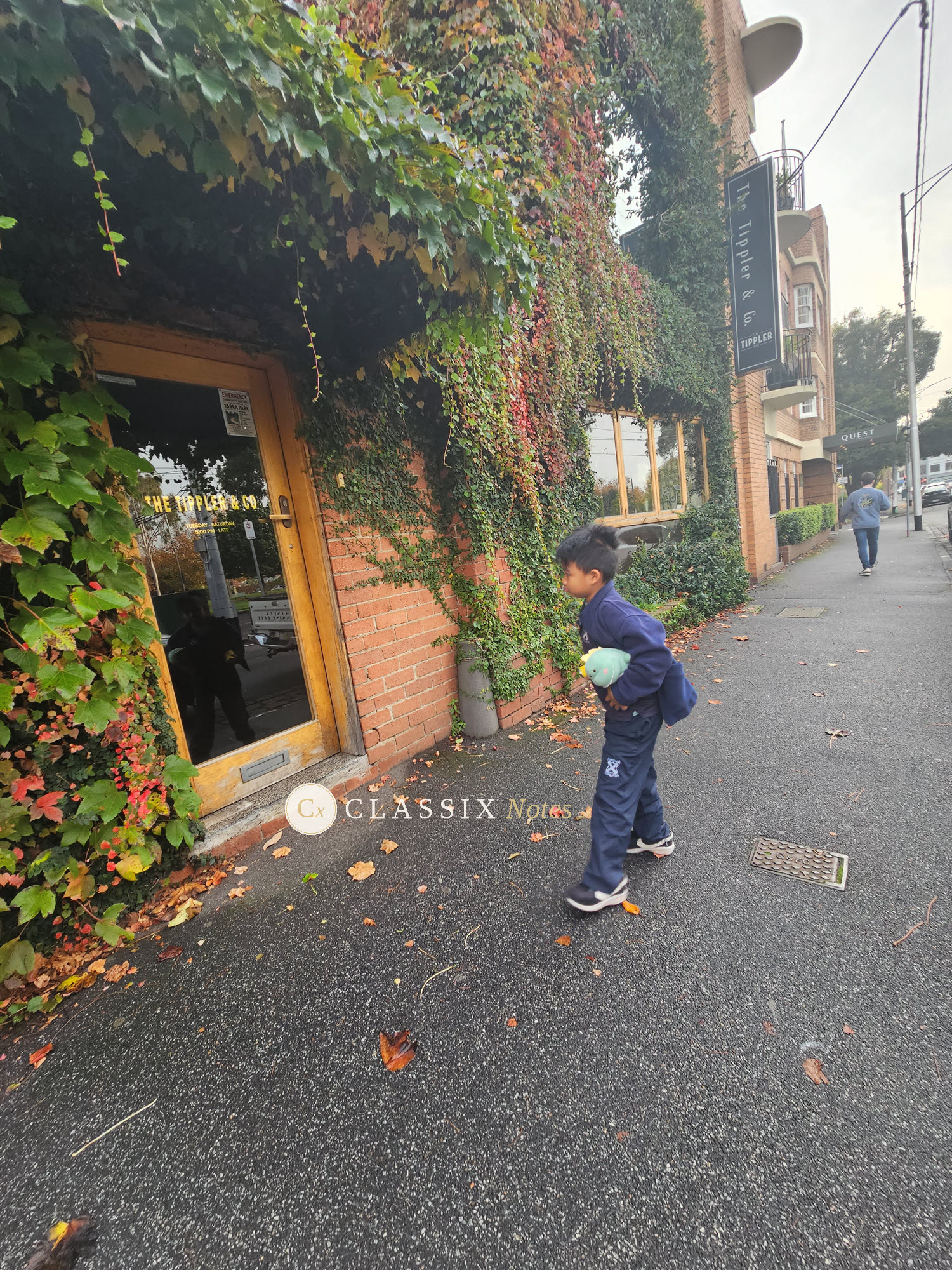
On Tuesday morning, Jason was ready to go to school, armed with seven dollars for two sausages. I whispered to my daughter, asking her to keep an eye on Jason during recess. When school finished and Jason got into the car, he immediately began complaining in full outrage.
“The sausage day wasn’t today! It is tomorrow! I have been waiting the whole day to get my sausage! And turns out it is tomorrow!!! Oh ya Mum, one kid asked me if I have cancer when he saw my patch. But I am so mad I don’t get the sausage!!!!”
On Wednesday morning, Jason went back to school. Again, armed with seven dollars. When I picked him up that afternoon, there was no longer any dramatic anger over the sausage that had broken its promise. Instead, Jason was experiencing a different fury.
“Today is the worst day!” he declared.
“Why? You got your sausage, right?” I asked.
“Yeah, the sausage was alright, but I have Mandarin class today! I don’t understand why we have to learn Mandarin. We are not Chinese! We don’t live in China!” Jason insisted.
His big sister answered in irritation, “Stop yapping, Jason! Just move school if you don’t want to learn Mandarin!”
“But Mum, you know I can’t even speak English that good! I had to go to speech therapy before, remember?” Jason argued, trying to avoid the additional burden of learning a foreign language.
“Well, look at you now, Jason, speaking English very fluently. Maybe we have to find a Mandarin speech therapy to help you?” I offered.
“Noooooo!!!! I’m fine! I’m fine!”
Watching Jason’s reflection in the rear-view mirror as he tried to steal his sister’s snack, listening to him chatter about his dislike of Mandarin class, I whispered, “Thank You Lord,” for the sausage He sent Jason. Even if the delivery was delayed because of a cosmic calendar mix-up.
“May we find our sausage when we need to keep going.
Or may the universe send one our way.
Or, in Jason’s case, two sausages. Lucky boy!”